
If your Mitsubishi Electric heat pump or air conditioner has stopped and is showing E6, it means the indoor side of the system and the outdoor unit have lost contact with each other. Mitsubishi calls it a communication error.
The good news is that E6 is often caused by something temporary. Mitsubishi Electric UK says it can follow a power cut, an electrical disturbance or severe weather, and a careful restart often clears it. If it keeps coming back, there is usually a wiring, power supply or circuit board fault that needs an engineer.
This guide is based on Mitsubishi Electric's own Ecodan homeowner advice, its E6 help video and its installation and service manuals. It covers what E6 means on each type of system, the safe checks you can do yourself, and when to call a qualified engineer.
We repair and service heat pumps and air conditioning across London, from Barnet and North London outwards.
What E6 means
The same code turns up on two different kinds of Mitsubishi Electric system, and the wording is slightly different on each. The meaning is the same, though: the two halves of the system are not talking to each other, so it will not heat or cool until the link is restored.
Ecodan air source heat pumps
On an Ecodan, the code appears on the main controller, usually alongside the unit it relates to and a phone number for your installer. Mitsubishi's Ecodan FTC6 installation manual lists E6 to EF as a "communication failure between FTC and outdoor unit".
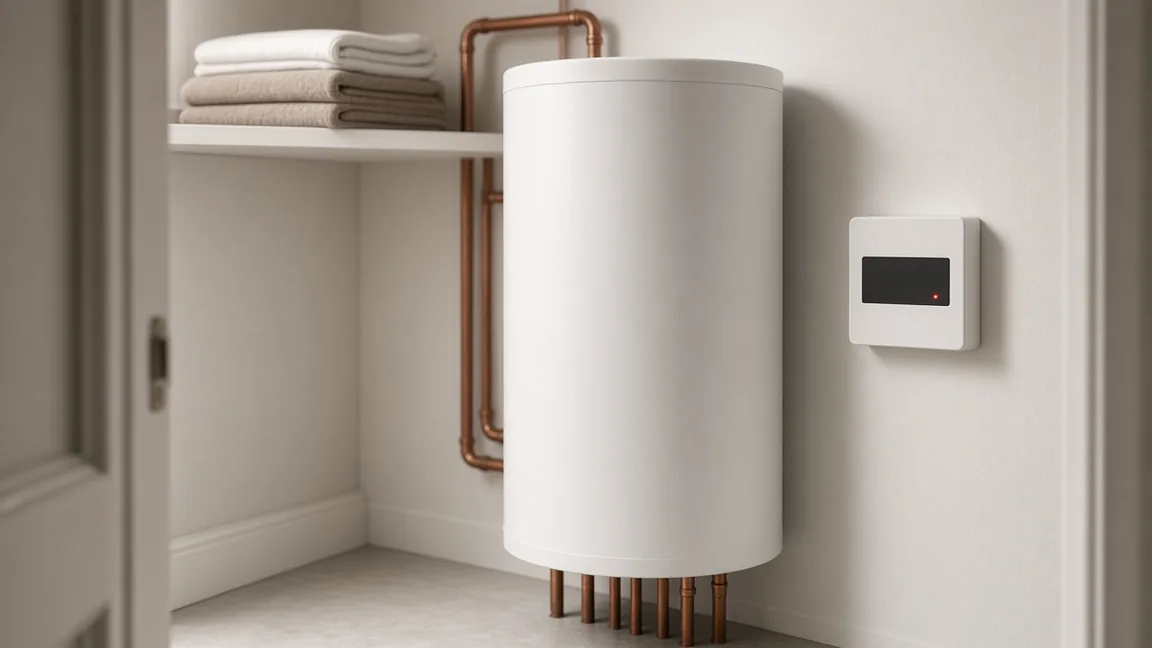
The FTC (flow temperature controller) is the control box for your heat pump. On many homes it is built into the side of the hot water cylinder or fitted on the wall nearby. In other words, E6 on an Ecodan means the controller indoors cannot hear the outdoor unit.
Mr Slim and other split air conditioning
On Mitsubishi Electric split air conditioning with a wired controller, such as Mr Slim ceiling cassettes and ducted units, E6 is shown on the controller screen. The PLA-M service manual describes it as an "indoor/outdoor unit communication error (signal receiving error)". The indoor unit sets the code when it has not received a proper signal from the outdoor unit for 6 minutes after the power is turned on, or for 3 minutes during normal running.
If you only have a handheld remote, you may not see "E6" at all. On Mr Slim units, the same fault shows as three blinks of the operation lamp (with three beeps) when the remote's check mode is used.
M Series wall-mounted air conditioners
Most M Series wall units (MSZ models) sold in the UK do not show a letter code on the handset. Instead, the power or operation lamp on the indoor unit blinks. On the MSZ-LN, for example, Mitsubishi's service manual calls the matching fault "miswiring or serial signal": the serial signal from the outdoor unit has not been received for 6 minutes. If your system is connected to a wired controller or an app, that same communication fault may be shown as a code instead.
What causes an E6 error
From Mitsubishi's manuals and homeowner advice, the usual causes are:
- A power cut or brief supply interruption. Mitsubishi says this is the most likely reason for E6 on an Ecodan. Storms and electrical disturbances can do the same.
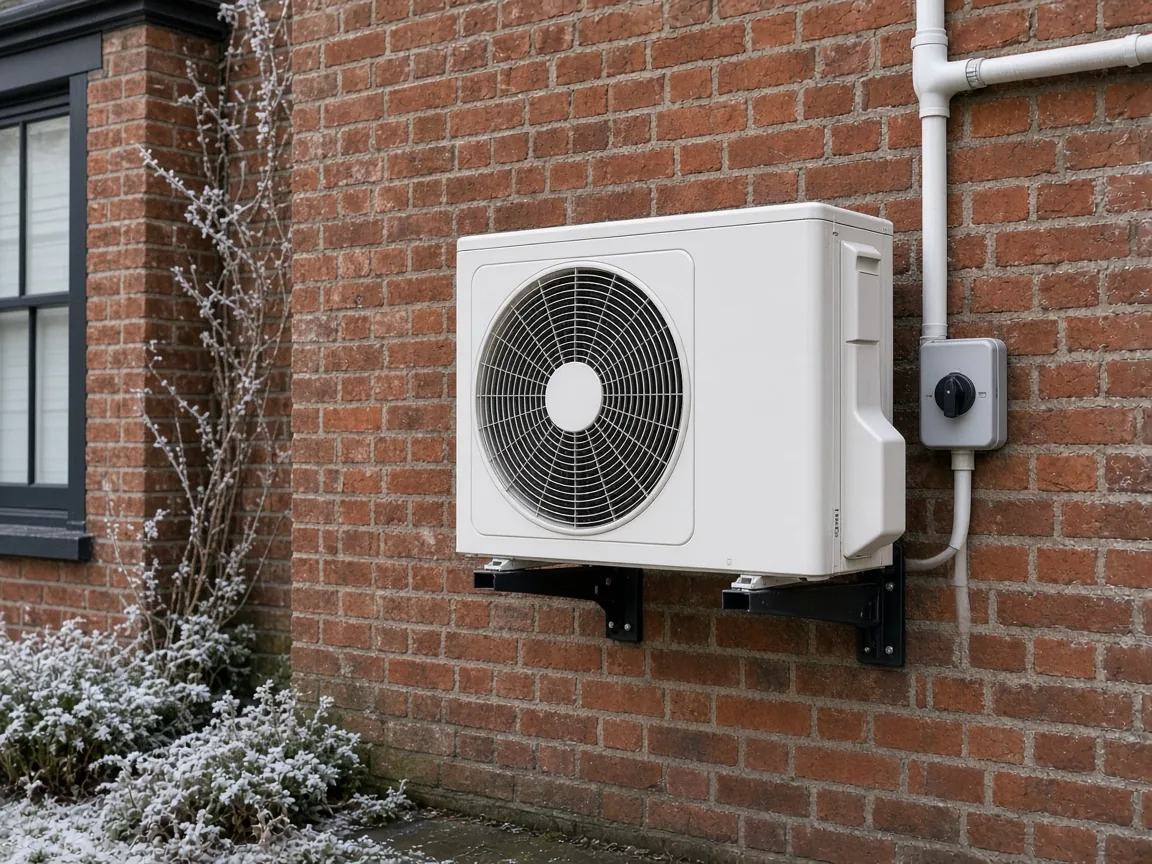
- The outdoor unit has no power. The isolator switch next to the outdoor unit, or its breaker in your consumer unit (fuse box), may have been switched off or tripped. Mitsubishi's first check for E6 on an Ecodan is that the outdoor unit has not been turned off.
- A problem with the cable between the indoor and outdoor units. The manuals list loose or poor connections, a damaged cable, a short circuit, or wires connected the wrong way round (on a new or recently moved system).
- Electrical interference. Mitsubishi lists "noise" getting into the connecting cable as a possible cause.
- A faulty control board (PCB) in the indoor unit, the FTC or the outdoor unit.
- A faulty outdoor fan motor, which the Mr Slim service manual lists as something that can upset the outdoor board.
Safe checks you can do yourself
These checks only involve switches you are meant to use. Do not take any covers off.
- Make a note of the code. Write down or photograph what the controller shows, including the unit it mentions. It helps the engineer.
- Check the outdoor unit isolator. Most outdoor units have a weatherproof isolator switch on the wall nearby. Make sure it is in the ON position. If it has been switched off (gardeners and decorators sometimes do this by accident), turn it back on.
- Check your consumer unit. Look for a tripped breaker or RCD labelled for the heat pump, outdoor unit or air conditioning. Some systems have separate breakers for the indoor and outdoor parts. If one has tripped, switch it back on once. If it trips again straight away, leave it off and call an engineer.
- Do a full power restart. This is the reset Mitsubishi recommends for E6. See the steps below.
- Have a look, without touching. From a safe distance, check whether the outdoor unit or the visible cable and trunking have obvious damage, such as a crushed cover or a cable pulled loose after garden or building work.
How to restart the system after E6
Mitsubishi's E6 video for Ecodan owners gives this method:
- Switch the system off at the controller (or remote). Mitsubishi's manuals say not to switch the breaker off while the unit is running, so do this first.
- Switch off the power to the indoor side and to the outdoor unit, at their breakers or isolators.
- Wait two to three minutes. This lets the stored power on the circuit boards drain away. You will know it is ready when the lights on the units have gone out.
- Switch the power back on. In Mitsubishi's video, the indoor controller (FTC) goes back on first, then the outdoor unit. If your installer has labelled the switches or left different instructions for your system, follow those, as some systems are wired so that the outdoor unit must be powered first.
- Wait for the system to reconnect and the controller to return to its normal screen, then switch the system back on.
Give it a few minutes before deciding the code is back. On an Ecodan, Mitsubishi says the controller can show "Please Wait" for up to 6 minutes after power-on, and that is normal. On Mr Slim, the controller shows "Please Wait" for about 2 minutes. On split air conditioning, the steps are the same: switch off with the remote first, then at the breaker, wait a few minutes and switch back on.
If E6 clears and stays clear, it was probably a one-off power or signal glitch. Keep an eye on it. If it comes back, book a check rather than restarting the system again and again.
What not to do
- Do not open the indoor unit, the FTC or the outdoor unit, or remove the isolator cover. They carry mains voltage, and parts on the circuit boards can stay charged for a while after the power is off.
- Do not try to check, reconnect or repair the cable between the units yourself. On these systems it carries mains power as well as the communication signal.
- Do not keep resetting a breaker that trips again. That points to an electrical fault.
- Do not keep clearing the code over and over. Resetting the error from the controller does not fix the cause, and repeated restarts make it harder for an engineer to see the pattern.
- If you notice a burning smell, smoke or scorch marks, switch the system off at the breaker and leave it off.
When to call an engineer
Call an engineer if:
- E6 comes back after a full restart, or will not clear at all
- a breaker or RCD keeps tripping
- you can see damage to the outdoor unit or the cable between the units
- the system has only recently been installed, moved or worked on
- you have more than one indoor unit and some of them have stopped
For an Ecodan, Mitsubishi's advice is that your installer is the first point of contact. The controller will often show their number. Mitsubishi also runs an Ecodan homeowner helpline, listed on its heat pump FAQ page.
An engineer will check the power supplies and isolators, test the communication wiring between the units, look for loose, damaged or corroded connections, and check the status lights on the control boards. If a board has failed, they will replace it.
Ecodan systems should be looked at by a qualified heat pump engineer. Air conditioning should be worked on by an F-Gas certified engineer. Even though E6 is an electrical fault rather than a refrigerant problem, finding it means working inside the units, close to the refrigerant circuit.
Similar codes
- E7 (Mr Slim and other split air conditioning): another indoor/outdoor communication error, this time a transmitting error. Causes and checks are similar.
- E9: a communication error picked up by the outdoor unit rather than the indoor side. On an Ecodan, Mitsubishi describes it as the outdoor unit receiving no signal from the indoor unit.
- E0 to E5 (Ecodan): a communication problem between the main controller and the FTC, rather than with the outdoor unit.
- J0 and J1 (Ecodan): communication with a wireless controller has been lost. Mitsubishi's FAQ has separate advice for these.
Need a hand?
Heatmaster London is an F-Gas certified company. We repair and service Mitsubishi Electric heat pumps and air conditioning across London, including Barnet and North London. If E6 keeps coming back, or you would rather someone checked it for you, contact us or see our heat pump, air conditioning repair and air conditioning pages. For offices and shops, see commercial. You can also browse our FAQs and the areas we cover.
This is the fourth post in our fault code series. For another air conditioning code, see the Daikin U4 error code, which is also a communication error. For boilers, see the Vaillant F.22 fault code (low water pressure) and the Worcester Bosch EA 227 fault code (no flame detected).
Sources
- Mitsubishi Electric UK, Ecodan homeowner heat pump FAQs (E6: communication between the indoor and outdoor units interrupted; can follow a power cut, electrical disturbance or severe weather; J0/J1 advice; homeowner helpline)
- Mitsubishi Electric UK, E6 error code video for Ecodan (power cut as the most likely cause; power off indoor and outdoor, wait two to three minutes, power back on; contact your installer if E6 remains)
- Mitsubishi Electric, Ecodan FTC6 PAC-IF07(1-3)B-E installation manual (BH79D843H06) (E6 to EF: communication failure between FTC and outdoor unit; check the outdoor unit has not been turned off; E9, E0 to E5; "Please Wait" for up to 6 minutes; power-up order where supplies are separate)
- Mitsubishi Electric, PLA-M EA2 service manual (OCH783B) (E6: indoor/outdoor unit communication error, signal receiving error; 6 and 3 minute detection; causes including wiring, noise, control boards and outdoor fan motor; three blinks on a wireless remote; E7; E9; "Please Wait" for about 2 minutes)
- Mitsubishi Electric, PAR-41MAA wired remote controller instruction book (error screen, stop operation and consult your dealer, resetting the error)
- Mitsubishi Electric, MSZ-LN VG2 service manual (OBH766G) (M Series wall units: "miswiring or serial signal" lamp blink when the outdoor signal is not received for 6 minutes)
- Mitsubishi Electric, MSZ-LN VG2 instruction book (do not switch the breaker off or on during operation; stop using the unit and consult your dealer when the operation lamp blinks)
- HVAC Report, Mitsubishi Electric error codes (trade cross-check: E6 indoor/outdoor unit communication error, wiring fault or PCB failure)