
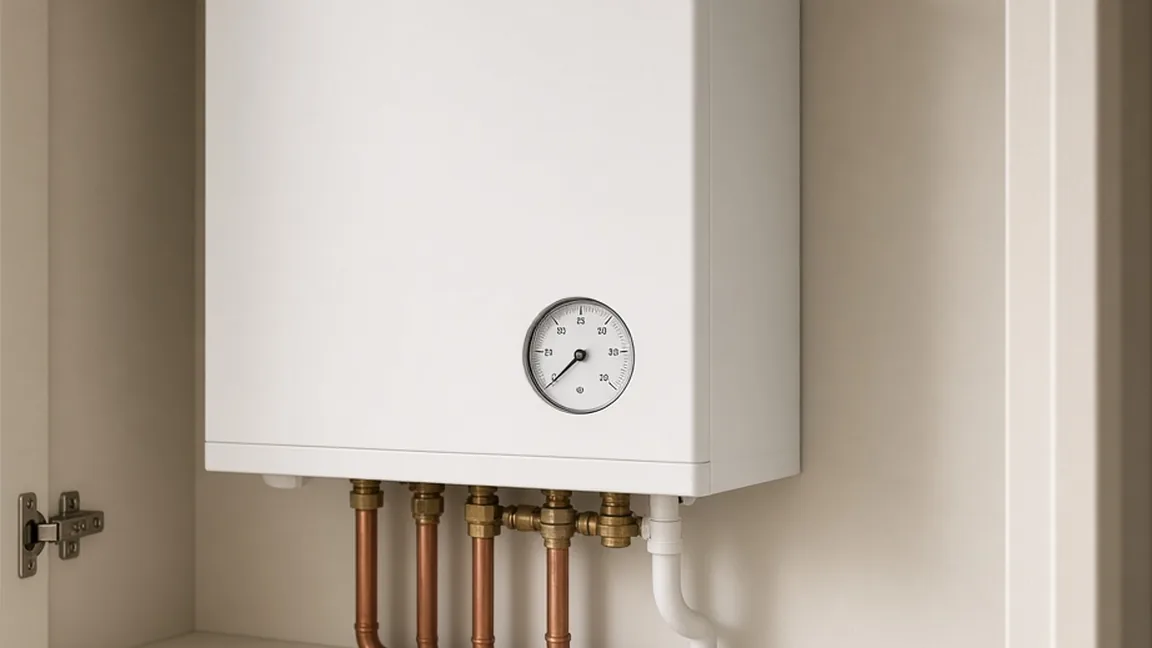
If your Vaillant boiler has stopped and the display shows F.22, the most common reason is simple: the water pressure in your heating system has dropped too low, and the boiler has shut itself down. Vaillant also refers to this as a "dry fire" lock-out on many ecoTEC models, because running a boiler with too little water can damage it.
The good news is that this is often something you can put right yourself, by checking the pressure gauge and topping the system up through the filling loop. This guide follows Vaillant's official F.22 advice and their repressurising instructions. If the pressure is already in the normal range, or it falls again after you top it up, that is the time to call a Gas Safe registered engineer.
We repair and service Vaillant boilers across London, from Barnet and North London outwards.
What F.22 means
On Vaillant's fault-code list, F.22 is low water pressure in the system.
Most modern Vaillant boilers (including the ecoTEC plus, pro, sustain and exclusive ranges) have a pressure sensor. On many ecoTEC models, the pressure figure on the display starts to flash if it falls below about 0.6 bar. If it falls further, typically below about 0.3 bar, the boiler switches off and F.22 appears. Exact thresholds can vary by model, so check your user manual if you still have it.
Until the system is topped up, the boiler will not run as normal.
What causes F.22
Vaillant lists these possible causes:
- The system pressure is below the normal range of 1 to 1.5 bar. That is the usual reason. Pressure can drop after radiators have been bled, if there is a small leak on a radiator, valve or pipe, if the pressure relief valve has let water out, or if the expansion vessel inside the boiler is no longer holding its air charge.
- A problem with the water pressure sensor, or loose, disconnected or faulty wiring to the pump or sensor. In that case the gauge may still show a normal reading, but the boiler thinks the pressure is low.
- A pump fault on an open-vented boiler. Most London homes have a sealed combi or system boiler with a filling loop, but older open-vented systems are different.
- A faulty internal expansion vessel.
The first thing to do is look at the pressure reading. That tells you whether this is a straightforward top-up or a job for an engineer.
Check the pressure gauge first
Your Vaillant boiler has a pressure gauge on the front or underside, and many models also show a digital reading on the display. On some ecoTEC boilers you can bring up the exact figure by pressing the minus button.
Vaillant's homeowner guidance is:
- Around 1 to 1.5 bar when the system is cold is the normal range to aim for.
- Below 1 bar (and especially a reading that has dropped towards zero) is low, and F.22 will often follow.
- With the heating on, it is normal for the reading to rise a little as the water heats up.
Also have a quick look around the boiler and radiators for damp patches, drips, rust marks or water coming from the small copper or plastic discharge pipe on an outside wall. If you can see a leak, or the pressure has dropped suddenly, close any filling loop you have opened and call an engineer.
How to repressurise using the filling loop
If the gauge is below 1 bar and you cannot see a leak, you can usually clear F.22 by topping the system up. Vaillant says a competent homeowner can do this; if you are not comfortable, book a visit and we will do it for you.
Always start with the boiler switched off and the system cool, so the gauge gives a true reading. The exact fittings differ by model, so use your user manual alongside these steps. Our boiler pressure guide has more detail, including boilers that use a filling key instead of a hose.
For a typical external filling loop (a short braided hose under the boiler, with a valve at each end):
- Switch the boiler off and let the system cool.
- Check both ends of the filling loop are connected securely. Filling loops can drip if they are loose.
- Open the isolation valve slowly (usually anti-clockwise, until the line on the valve lines up with the pipe).
- Open the handle valve slowly. You should hear water entering the system.
- Watch the gauge and stop when it reaches 1 to 1.5 bar. Do not keep filling past that.
- Close the handle valve first, then the isolation valve.
- If the loop is the detachable kind, disconnect it and catch any drips.
- Switch the boiler back on. If F.22 is still on the display, reset the boiler as shown in your manual.
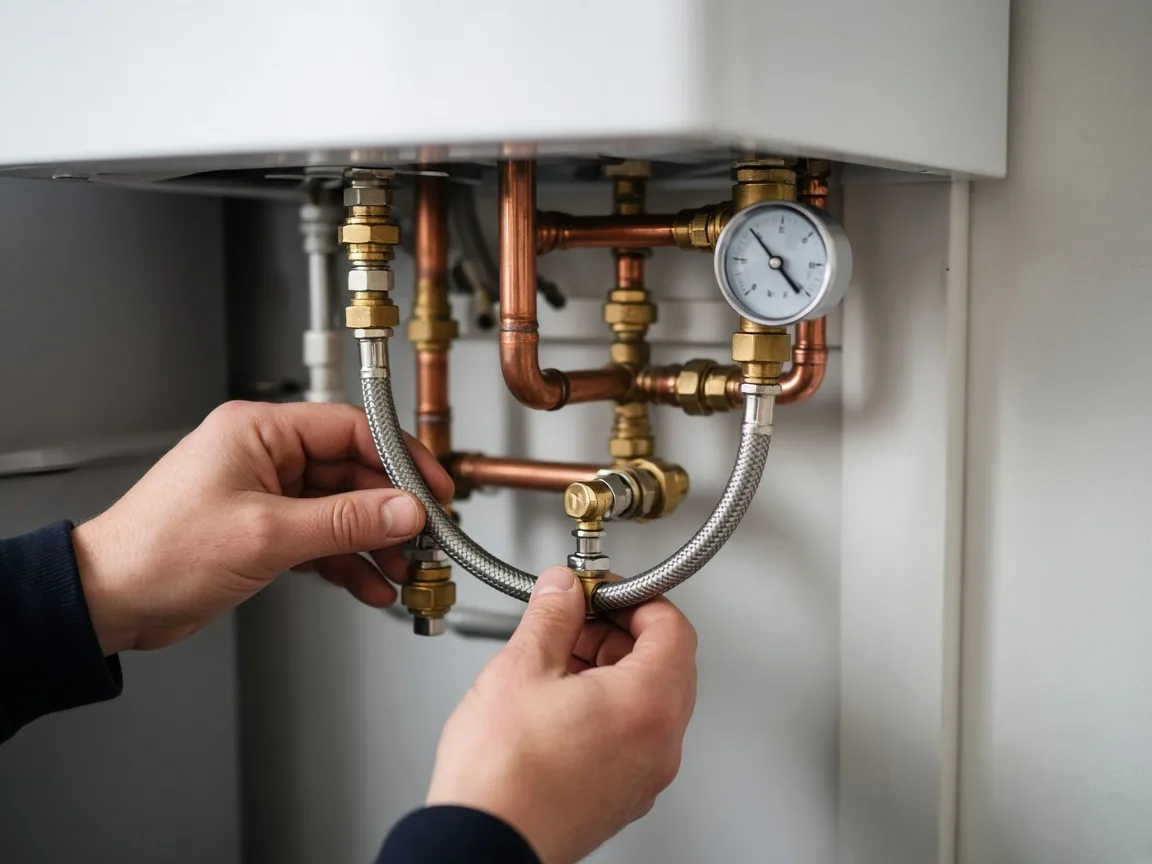
Some Vaillant boilers have a built-in filling device or a filling key under the case instead of a hose. The aim is the same: let water in slowly until the cold reading is between 1 and 1.5 bar, then shut it off fully. If you cannot find the loop, or you are not sure which type you have, do not force any fittings.
If the pressure is already in the normal range
If the gauge already shows more than 1 bar and F.22 is still on the display, do not try to fix it yourself. Vaillant is clear that this is a job for an engineer, because the casing has to come off to check the sensor, wiring, pump or expansion vessel.
Do not open the boiler case. Anything inside the case, and anything on the gas side, must only be done by a Gas Safe registered engineer.
If the pressure keeps dropping
A one-off top-up after bleeding radiators is common and not always a worry. If you fill the system and the pressure falls again within days, or drops as soon as you close the valve, water is escaping somewhere. Common reasons include a leak, a pressure relief valve that is letting water out, or a failed expansion vessel.
Do not keep topping it up. Fresh mains water entering the system again and again can make corrosion and sludge worse. Book a boiler repair so the cause can be found and fixed.
Gas safety
If you smell gas, or think you have carbon monoxide symptoms (headaches, dizziness, nausea, feeling better when you leave the house), turn off the gas at the meter if you can, open windows, get outside and call the National Gas Emergency Service on 0800 111 999. Every home with a gas appliance should have a working carbon monoxide alarm.
Need a hand?
Heatmaster London repairs and services Vaillant boilers across London, including Barnet and North London. If F.22 keeps coming back, the pressure will not hold, or you would rather not do the top-up yourself, contact us or see our boiler repair and boiler servicing pages. You can also browse our FAQs and the areas we cover.