

The short answer is yes or no. It all comes down to how well your property is surveyed, and how well the job is carried out.
A heat pump installation in a London home can heat it comfortably and efficiently. It can also leave you with high bills and rooms that never quite get warm. The difference is rarely the outdoor unit itself. It is the groundwork that happens before anyone starts installing.
The groundwork matters more than the installation
If a heat pump is treated as a like-for-like swap for a boiler, and the existing radiators stay as they are, the result is often disappointing. The Energy Saving Trust notes that radiators sized for a typical boiler, which often runs at around 75°C, are frequently too small once the water in the system drops to around 45°C, which is usual for a heat pump. That is why the survey, the room-by-room heat loss calculation and the system design have to be taken seriously. In our experience, this groundwork is more important than the installation itself.
Why a room-by-room heat loss calculation matters
Every room loses heat differently. A north-facing living room with a large bay window is not the same as a small internal bedroom, or a room above an unheated garage. A single figure for the whole house, or a guess based on the old boiler or the Energy Performance Certificate, is not enough.
The accepted UK method is a room-by-room heat load calculation, following BS EN 12831-1 and the MCS heat pump design standard (MIS 3005-D). It covers room sizes, the building fabric, ventilation, and design temperatures — typically 21°C for a living room, 18°C for a bedroom and 22°C for a bathroom.
The total heat loss sizes the heat pump. The loss for each room sizes that room’s radiator or underfloor heating. Get either wrong, and some rooms may never catch up. Before installation starts, you should be given the specific heat loss for each room in writing.
Flow temperature, efficiency and your bills
A heat pump moves heat from outside into your home. It does that most efficiently when the water it sends to your radiators or underfloor heating — the flow temperature — is kept as cool as it can be while still keeping you comfortable.
The Energy Saving Trust describes 35–45°C as typical for a heat pump. Seasonal efficiency (SCOP) improves as that flow temperature comes down. A well-installed heat pump will often deliver around three units of heat for every unit of electricity it uses. Push the flow temperature up to make undersized radiators work, and that efficiency falls away.
If the design is right, the heat pump works at its best and can save a good deal of money on energy bills. If the design is wrong, the opposite is true.
Radiator upsizing, underfloor heating and low-temperature design
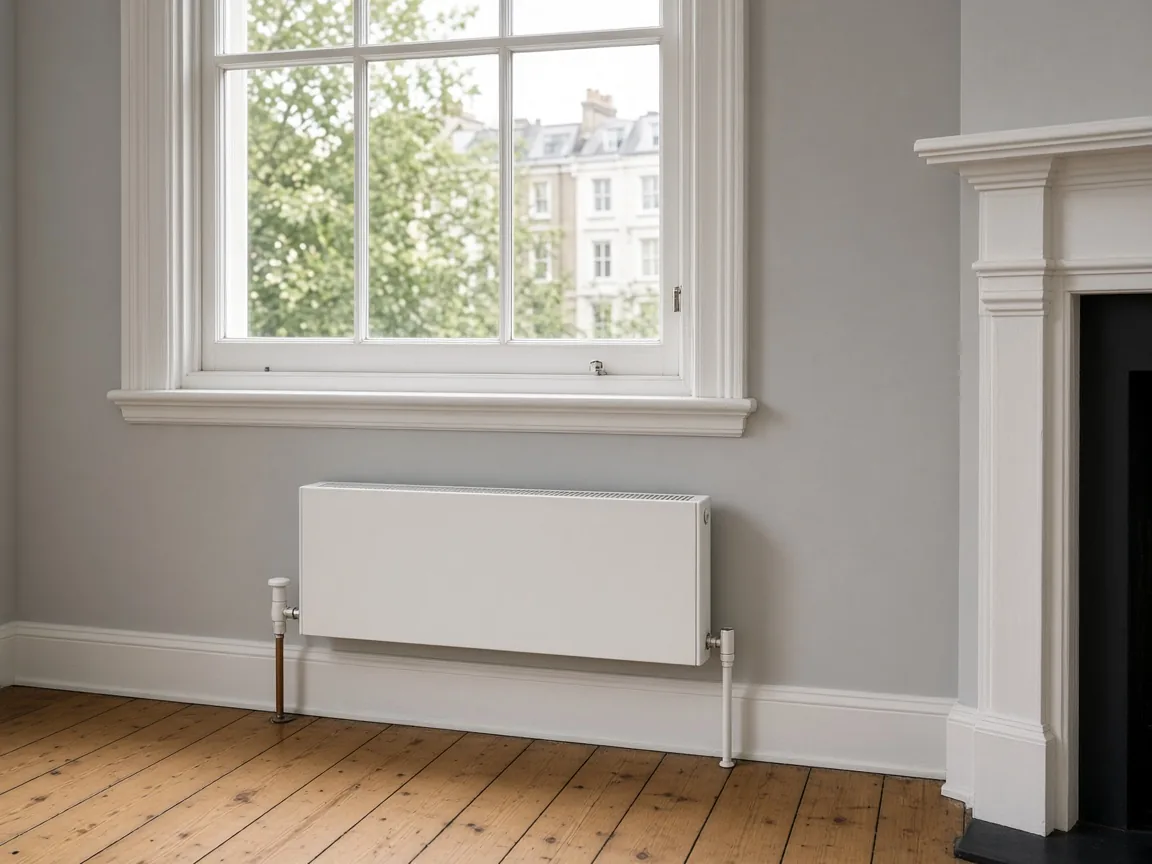
You do not always need new radiators. Once each room’s heat loss has been calculated, the ones you have may already be large enough. Sometimes a single-panel radiator needs to become a double or triple panel. Sometimes a radiator genuinely needs to be upsized, or a room is better served by underfloor heating.
Underfloor heating suits heat pumps particularly well, because it is designed to run at a low water temperature. Radiators work too, provided they are sized for that lower temperature. Nesta’s research is clear that efficiency depends above all on system design and adequately sized emitters.
If radiator upsizing is needed, we will tell you before we install the heat pump, and we can do that work for you.
Insulation and draughts: helpful, but not the whole story
A poorly insulated, draughty house loses more heat, whether you have a boiler or a heat pump. That means a larger system and more energy to stay warm. It does not mean a heat pump cannot work in an older London property. Nesta has been explicit that homes do not have to be highly insulated first: a well-designed system with the right radiators can still work efficiently.
You do not need lots of insulation to have a heat pump, but it works best in a well-insulated home. The Energy Saving Trust recommends a minimum of 270mm of loft insulation, and notes that an uninsulated home loses about 25% of its heat through the roof. Cavity wall insulation, where the wall can take it, and careful draught-proofing — without blocking needed ventilation — sit in the same category.
If we think a recommendation would help, we will give it to you before we install the heat pump.
What a good heat pump survey includes
A proper survey is not a quick look at the boiler cupboard. For a heat pump it should typically include:
- A visit to the property, with measurements of each heated room
- A room-by-room heat loss calculation to the method above
- A review of existing radiators or underfloor heating, and a list of any that need to change
- An assessment of insulation, draughts and obvious fabric improvements
- A proposed design flow temperature
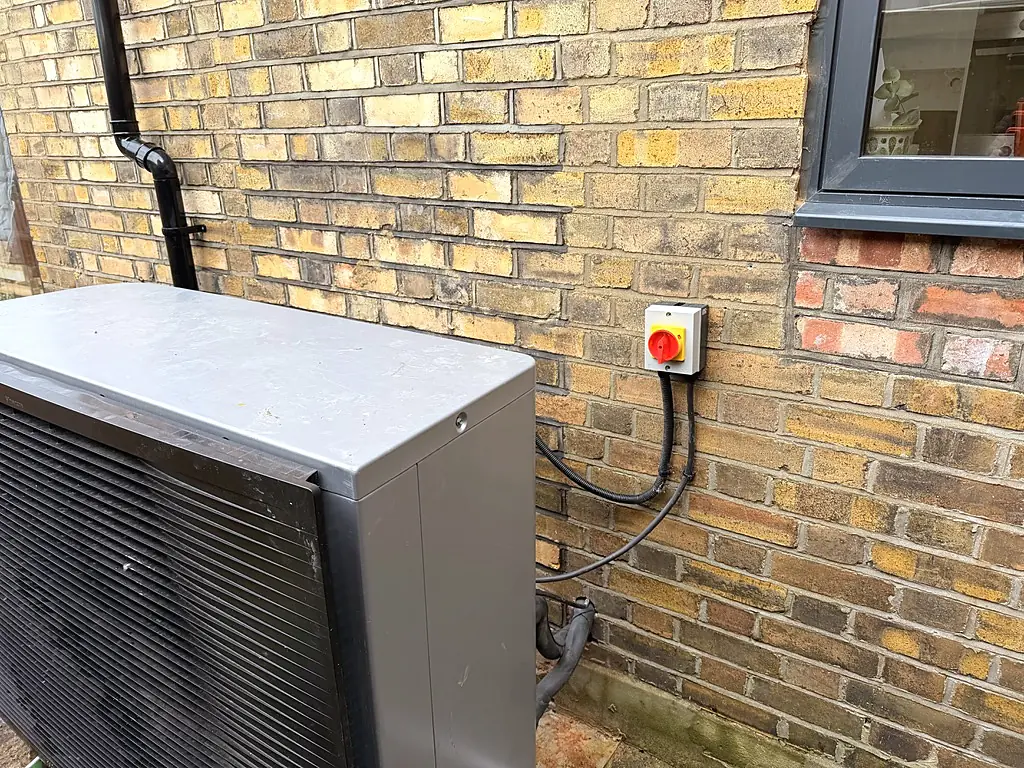
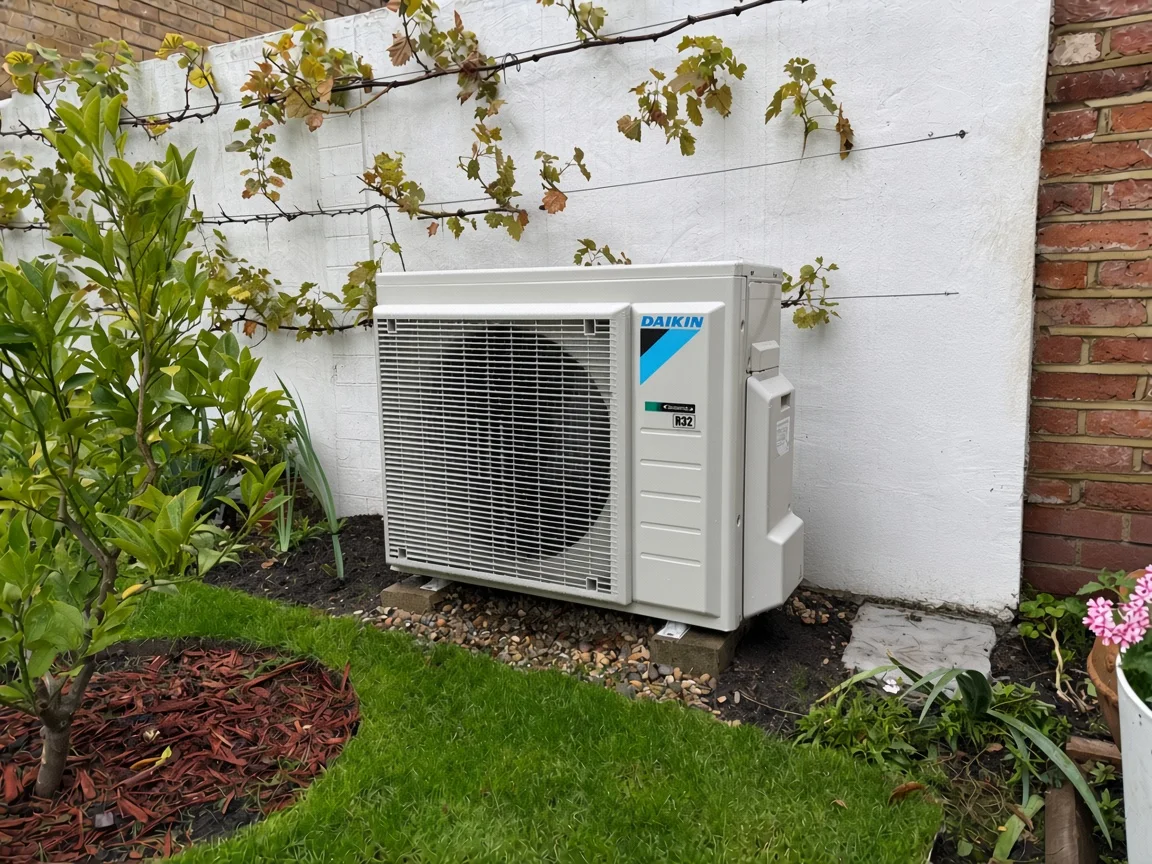
- Siting of the outdoor unit, including access, airflow and, where permitted development is being used, a sound assessment to the MCS 020 method
- Space for a hot water cylinder, plus the pipework and electrical supply
- Written recommendations, including the room-by-room heat losses, before installation begins
A quote without that survey is not a complete quote.
How we approach heat pump installation in London
We are a Barnet firm. For heat pump installation in London — across North London and Greater London — we take each step of the job seriously, especially the heat loss calculation.
You can start with a quick online estimate on our heat pump quote page. That is a starting point, not the final design. Before anything is fitted, we carry out the room-by-room survey, tell you what we recommend, and only size the system once that work is done.
If you are eligible, we can also apply for the Boiler Upgrade Scheme grant on your behalf. In England and Wales that is currently £7,500 off an air source heat pump, with an extra £1,500 until March 2027 if the property is heated by oil or LPG and has no mains gas connection. Amounts and rules can change, so we confirm the current figure on your quote.
Frequently asked questions
Can I keep my existing radiators if I switch to a heat pump?
Sometimes, yes. It depends on each room’s heat loss and on the design flow temperature. The only reliable answer is the room-by-room calculation.
Does my home have to be fully insulated first?
No. A heat pump can work in a less well-insulated home if the system is designed for it. Straightforward measures such as loft insulation and draught-proofing are usually worth doing first.
What should I expect from a heat loss calculation?
A calculation for every heated room, not a single whole-house estimate, to the recognised UK method. You should be given those figures in writing before installation starts.
Is the £7,500 Boiler Upgrade Scheme grant still available?
Yes, at the time of writing, for eligible properties in England and Wales. It is applied for by a certified installer. We will confirm whether you appear to qualify, and the current amount, on your quote.
Book a survey with Heatmaster London
If you are considering a heat pump, the most useful next step is a proper survey.
Start a heat pump quote or call us on 0330 133 1626. We will come and do the groundwork properly, talk you through any recommendations — including radiator upsizing if it is needed — and only then talk about installation.